Military Hazing
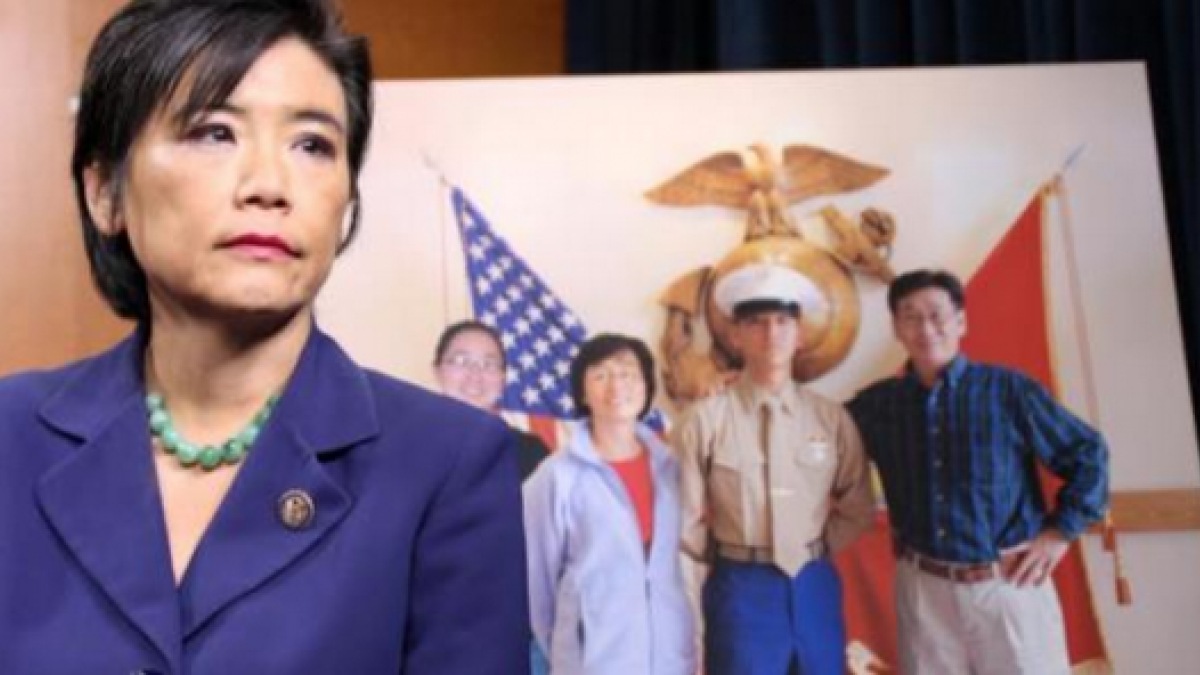
Hazing has no place in the United States military. It destroys lives, undermines unit cohesion and military readiness, and betrays the trust of the servicemembers who volunteer to defend our country. For me, the fight to end military hazing is also deeply personal. My nephew, Lance Corporal Harry Lew, was a Marine stationed in Afghanistan. One evening, his fellow Marines took it upon themselves to administer what they called "corrective training." For three and a half hours, they berated him, ordered him to dig a foxhole, and forced him to perform useless exercises while carrying his heavy body armor and a 25-pound sandbag, stomped on his back, kicked and punched him, and poured the contents of a sandbag onto his face and into his mouth.
Twenty-two minutes after the abuse ended, Harry died by suicide with his own gun. He was only 21 years old.
Harry’s death changed my life and began my more than decade-long fight to end hazing in our Armed Forces. As I investigated what happened to him, I quickly learned that his experience was not an isolated incident. There was Private Danny Chen, Brushaun Anderson, Hamson Daniels McPherson Jr., Jarrett Wright, and countless other victims of hazing. Servicemembers have been targeted because of their race, sex, religion, sexual orientation, or simply because they were perceived as different.
Fighting for Accountability
In 2012, I called for a Congressional hearing on military hazing, which became the first hearing on military abuse since 1979 and may have been the first official Congressional hearing on examining hazing across every branch of the Armed Forces.
At that hearing, representatives from each military branch maintained that their hazing policies were working and the problem was under control. But the experiences of Harry and so many other Servicemembers told a different story.
That is why I authored and secured an amendment in the Fiscal Year 2013 National Defense Authorization Act (NDAA) requiring each military branch to provide thorough reports on its hazing policies, procedures for tracking and reporting incidents, and training practices. I have since successfully passed amendments to renew and expand this reporting requirement, most recently in the FY 2022 NDAA.
The reports Congress has received since 2014 have demonstrated why this oversight remains necessary. Inconsistent and inadequate tracking systems have produced unreliable data, making it difficult to determine the true prevalence of hazing across the military and hold perpetrators accountable.
Exposing Gaps in the Military’s Response
In 2014, I secured an amendment to the FY2015 NDAA requiring the first-ever independent Government Accountability Office (GAO) review of anti-hazing efforts across every military branch and the Coast Guard.
When Congress received the GAO’s independent assessment in February 2016, its findings were deeply troubling. The report found that the Department of Defense had not fully implemented its anti-hazing policies, did not know the extent to which existing policies were being implemented, lacked clear and consistent training for servicemembers, and relied on incomplete and underdeveloped systems for tracking hazing incidents.
In response, I testified before the House Armed Services Committee in March 2016 and called for concrete reforms. I pushed annual reports to Congress on the Department of Defense’s anti-hazing efforts; uniform and comprehensive department-wide systems for tracking hazing, including information about protected classes such as race and religion; improved training at every level of command so servicemembers can identify and stop hazing; and meaningful evaluations of the prevalence of hazing throughout the Armed Forces. I was pleased that all four of these recommendations were included in the House-passed FY2017 NDAA.
But our work is not finished. Another independent assessment delivered to Congress in December 2021 found that significant problems persisted, including incomplete data on hazing complaints, insufficient training, and a need for greater resources for servicemembers. While the Department of Defense and Coast Guard have implemented some of these recommendations, I will continue working to ensure every branch of our military effectively enforces anti-hazing policies, accurately reports incidents when they occur, and provides servicemembers with the protections and resources they deserve.
Fighting the Trump Administration's Rollback of Hazing Protections
On September 30, 2025, Secretary of Defense Pete Hegseth announced sweeping changes to how the military handles allegations of hazing and other forms of abuse. In remarks at Marine Corps Base Quantico and subsequent policy memorandums, Secretary Hegseth called for drill instructors to be permitted to “instill healthy fear” in recruits, “put their hands on recruits,” ransack rooms, and reinstate the outdated and ineffective practice of “shark attacks.”
These directives directly contradict the Department’s own reports, which state that these behaviors weaken unit cohesion and jeopardize mission success.
That is why, on October 10, 2025, I led 27 Members of Congress in sending a letter to Secretary Hegseth to immediately withdraw these dangerous policy changes, uphold the Department’s statutory reporting requirements, and strengthen protections for servicemembers and recruits.
Weakening safeguards against hazing will only put more lives at risk. I will continue conducting rigorous oversight of the Department of Defense to ensure it follows the law, implements statutory reporting requirements, and protects the dignity and safety of every servicemember and recruit.
The Harry Lew and Danny Chen Military Justice Reform Act
Oversight alone is not enough. We also need stronger and more consistent legal accountability for military hazing.
That is why I introduced the Harry Lew and Danny Chen Military Justice Reform Act, named in honor of my nephew and Army Private Danny Chen, a Chinese American soldier who died by suicide after enduring physical abuse and racist hazing from his superiors.
The legislation would require an examination of establishing hazing as a standalone offense under the Uniform Code of Military Justice, an important step toward ensuring the military has strong and consistent tools to address hazing and hold perpetrators accountable.
I was pleased that the text of this legislation was included in both the House and Senate versions of the FY2027 National Defense Authorization Act.
For more than a decade, I have fought to ensure that what happened to Harry, Danny, and far too many other servicemembers is never treated as an acceptable part of military culture. Every person who puts on our nation’s uniform deserves to serve with dignity and without fear of abuse from the very people who are supposed to have their back.
Share Your Story
At the time of Harry's death, I did not know how common his tragedy was or how many other servicemembers had suffered as he did. But soon, the letters started pouring in, day after day and week after week. Mothers, friends, veterans, and servicemembers themselves wrote to me in excruciating detail about what they or their loved ones had endured.
Their stories have helped guide my work to end military hazing, and I remain committed to being a voice for victims who too often feel they have nowhere to turn. If you or someone you love has experienced military hazing, I want to hear from you. Your story matters, and it can help Congress understand where protections are failing and what more must be done.
You can share your story by calling my Washington, D.C. office at 202-225-5464 or by visiting my Share Your Story portal.