Rep. Chu Introduces Bill to Protect Pets During Wildfires and Disasters
WASHINGTON, D.C. – Last week, Rep. Judy Chu (CA-28) joined Rep. Brian Mast (FL-21), Rep. Dina Titus (NV-01), Rep. Vern Buchanan (FL-16), and Senator Adam Schiff (CA) in introducing bipartisan legislation to strengthen emergency preparedness for companion animals.
During weather-related disasters, families are frequently forced to evacuate with minimal time. For pet owners, evacuation can mean an impossible choice: leave their pets behind or risk their own safety by staying home. Too often, families choose the latter—endangering themselves and complicating rescue efforts for first responders. The Los Angeles Times documented many of these stories in the wake of the Eaton and Palisades fires.
The Providing Essential Temporary Shelter Assistance for Emergencies (PETSAFE) Act expands the allowable use of existing emergency management funds so states and local governments can better plan for animal evacuation, sheltering, veterinary care, training, and specialized rescue equipment during disasters.
Under current law, many animal preparedness efforts are limited by high local cost-share requirements. The PETSAFE Act lowers that barrier by increasing the federal cost share for eligible companion animal preparedness activities from 50 percent to 90 percent, making it more affordable for communities to implement protective plans for people and pets.
“When the Eaton Fire tore through my district, so many families were forced into an impossible choice. As a result, many families delayed evacuating because they couldn’t bear to leave their pets behind. Thankfully, local shelters and community members across California stepped up to care for animals of all kinds that had to be relocated out of the fire’s path,” said Rep. Judy Chu. “Disasters like these make it clear that emergency planning must also account for the safety and wellbeing of pets. That’s why I’m teaming up with Representative Brian Mast and Senator Adam Schiff to introduce the PETSAFE Act. Our bill would ensure that state and local governments can utilize FEMA grant money to purchase the resources they need to protect animals during disasters,” she added.
“When we plan better for animals, we save human lives too,” said Rep. Brian Mast. “This bill helps communities prepare smarter, respond faster, and keep families together when disaster strikes.”
“Our pets are part of our families, and when disaster strikes, it’s important that communities have the resources to ensure they aren’t left behind. I’m proud to partner with Representative Brian Mast to reintroduce this legislation which will help us protect our animals during major disasters and emergencies,” said Senator Adam Schiff.
“Protecting pets during disasters is not just compassionate, it is responsible. As an original supporter of the bipartisan PETSAFE Act, I am advancing a practical, lifesaving approach that helps families evacuate safely without leaving their furry friends behind,” said Rep. Dina Titus.
“For millions of families, pets are part of the family and in disaster-prone states like Florida, families often won’t evacuate if they can’t bring them, putting lives at risk,” said Rep. Vern Buchanan. “The PETSAFE Act improves preparedness and removes unnecessary cost barriers, so states and local governments have the flexibility they need to protect animals, families and first responders during hurricanes and other emergencies. As co-chair of the Congressional Animal Protection Caucus, I am proud to join Congressman Brian Mast in leading this commonsense, bipartisan effort.”
“The Eaton Fire showed us that disasters don’t just displace people—they endanger the animals who depend on us. Allowing FEMA funds to support local efforts to protect pets during emergencies helps keep families together and saves lives,” said Chris Ramon, President & CEO of Pasadena Humane.
“Americans consider their pets to be a part of the family, and many won’t evacuate during an emergency without them. Empowering communities to include animals in emergency response plans is critical to preventing further devastation and helps save the lives of animals, families, and first responders,” said Daniel Leonardini, director of federal legislation for the ASPCA.
During the Eaton Fire, Pasadena Humane alone took in more than 450 pets. The ASPCA responded to 112 service calls, helping 538 animals — including chickens, cats, goats, pigs, parakeets, and even a gecko and a tortoise, many of which were safely reunited with their families.
You can read the full bill here.
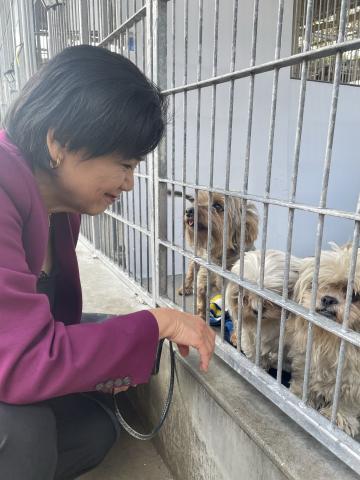
Photo Caption: After the devastating Eaton Fire, Rep. Chu visited the more than 450 pets that Pasadena Humane took in as families rushed to evacuate their homes.
###